
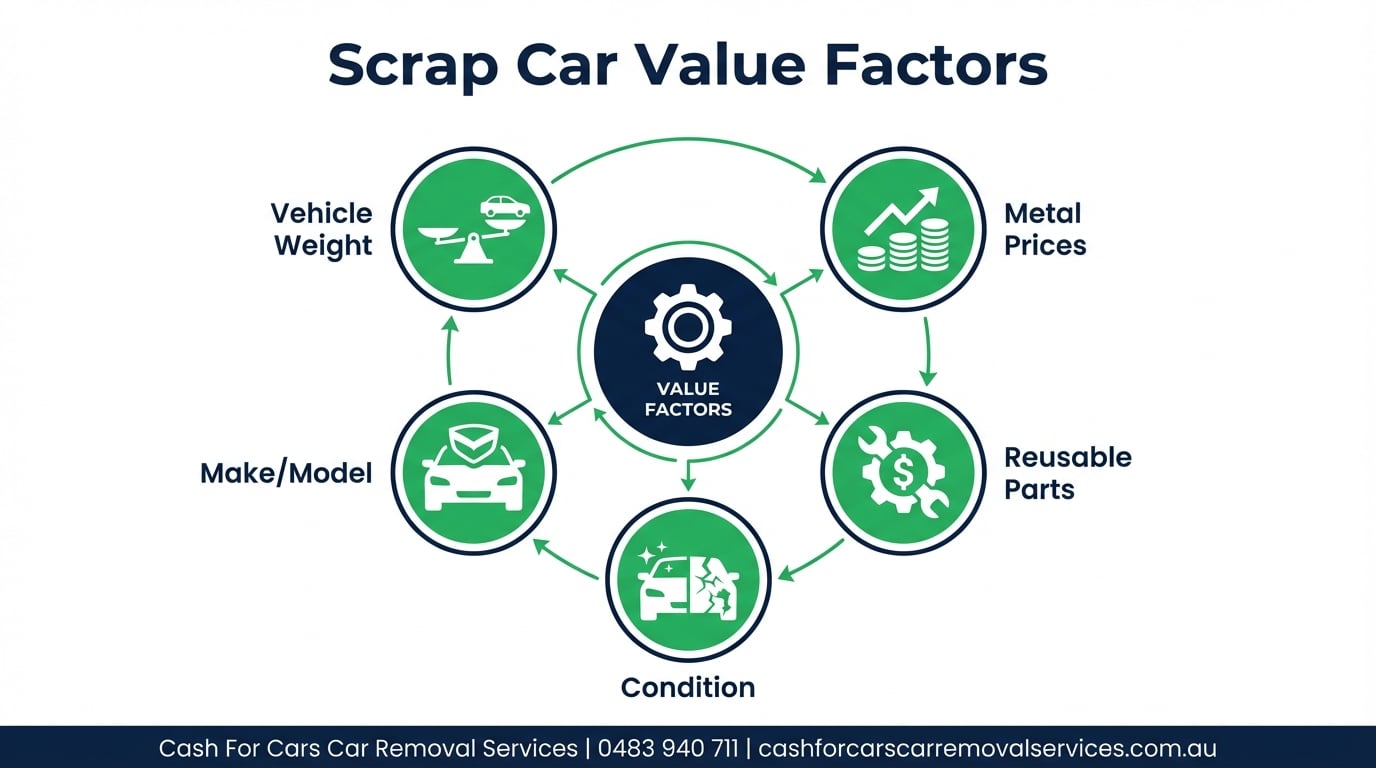
What Determines Scrap Car Value?
The value of a scrap car depends on multiple factors, from global metal markets to local demand for parts. Understanding these factors helps you evaluate offers and ensure you're getting a fair price.
Factor 1: Current Metal Prices
Steel Prices
Steel makes up approximately 65-70% of a car's weight:
- Global steel prices fluctuate with demand
- Australian scrap steel typically sells for $200-$400 per tonne
- A typical car contains 800-1,000 kg of steel
- Engine blocks, wheels, body panels
- Worth significantly more per kg than steel
- Modern cars may contain 100-200 kg of aluminum
- Copper: Found in wiring, radiators, motors - highly valuable
- Platinum group metals: In catalytic converters - very valuable
- Lead: In batteries - recycled separately
- Engines (if working or rebuildable)
- Transmissions
- Differentials
- Body panels in good condition
- Alloy wheels
- Electronics and sensors
- Doors and mirrors
- Lights and lenses
- Interior trim
- Suspension components
- Brakes
- Running vehicles: Worth more due to salvageable drivetrain
- Non-running: Still valuable for parts and metal
- Engine problems: Depends on cause and repairability
- Rust-free: Maximum parts value
- Surface rust: Minor impact
- Structural rust: Reduces overall value
- Accident damage: Depends on which parts affected
- Parts are sought after
- Buyers will pay premium for popular parts
- Toyota, Holden, Ford parts often in demand
- Newer vehicles: Higher parts value, lower scrap ratio
- 10-15 years old: Good balance of parts and scrap value
- 20+ years old: Mainly scrap value unless classic/collectible
- Metro areas: More competition, often better prices
- Regional areas: Fewer buyers, but quality services available
- Remote areas: May require longer pickup times
- Estimate weight: Look up your model's curb weight
- Calculate base metal value: Weight × $0.20-0.35/kg (current steel rate)
- Add parts premium:
- Subtract for damage: Significant issues reduce value
- Weight: 1,500 kg
- Base value: 1,500 × $0.30 = $450
- Popular model bonus: +$50
- Non-running: -$100
- Estimated: $400
- Market knowledge: We know current demand for specific parts
- Network access: We can place parts and maximize value
- No guesswork: Instant, binding quotes
- Free service: No cost to get a quote
- Transparent pricing based on real market values
- Quotes from $100 to $30,000 depending on vehicle
- Price guaranteed at pickup
- No hidden fees or deductions
- Free removal Australia-wide
Aluminum Prices
Aluminum content has increased in modern vehicles:
Other Metals
Factor 2: Vehicle Size and Weight
Larger vehicles contain more recyclable material:
| Vehicle Type | Approximate Weight | Typical Scrap Value |
|---|---|---|
| Small car | 1,000-1,200 kg | $150-$400 |
| Medium car | 1,300-1,500 kg | $250-$500 |
| Large car | 1,500-1,800 kg | $350-$700 |
| Ute | 1,600-2,000 kg | $400-$800 |
| 4WD | 1,800-2,500 kg | $500-$1,200 |
| Truck | 2,500+ kg | $800-$2,000+ |
Factor 3: Reusable Parts
Beyond scrap metal value, reusable parts can significantly increase value:
High-Value Parts
Moderate-Value Parts
Factor 4: Vehicle Condition
Running vs. Non-Running
Body Condition
Factor 5: Make, Model, and Age
Popular Models
High-demand vehicles are worth more:
Age Considerations
Factor 6: Location
Your location affects the final price:
How to Estimate Your Car's Scrap Value
Quick Calculation Method
- Running condition: +20-40%
- Popular model: +10-20%
- Good body: +10-15%
Example Calculation
2012 Toyota Camry, non-running, fair condition:
Note: This is illustrative only. Actual offers may vary based on current market conditions.
Why Choose Professional Valuation
While estimates help, professional car buyers provide accurate valuations:
Our Pricing Promise
Cash For Cars Car Removal Services offers:
Conclusion
Your scrap car's value depends on multiple factors, but you don't need to calculate it yourself. Contact us for an instant, no-obligation quote based on current market conditions.
Call 0483 940 711 now to find out exactly what your car is worth!