
The Rise of EVs in Australia
Electric vehicles are becoming increasingly common on Australian roads. With brands like Tesla, BYD, and traditional manufacturers all offering EV options, many Australians are wondering what happens when these vehicles reach end-of-life.
Key Differences: EVs vs Traditional Vehicles
What's Different
Electric vehicles present unique recycling challenges and opportunities:
- High-voltage battery packs weighing 300-700kg
- Rare earth elements in motors
- Copper wiring in greater quantities
- Specialized electronics and components
- No engine oil or transmission fluid to dispose
- Steel and aluminium body panels
- Glass, plastic, and rubber
- Interior materials
- Standard suspension components
- Second-life applications - Home energy storage
- Material recovery - Lithium, cobalt, nickel, manganese
- Component reuse - Cells may still have capacity
- Typical salvage values: $500-$5,000+ depending on condition
- Limited Australian recycling capacity
- Transport regulations for damaged batteries
- Fire risks during storage
- Evolving technology
- Specialized facilities in major cities
- Research partnerships with universities
- Growing industry expertise
- Government investment in infrastructure
- Planned battery recycling plants
- Extended producer responsibility schemes
- Export regulations updates
- Circular economy initiatives
- Working EVs - Fair market value
- Non-running EVs - Based on parts and battery value
- Damaged EVs - Safe removal and recycling
- All brands - Tesla, Hyundai, BYD, Nissan, and more
- Battery condition significantly affects value
- Charging equipment may add value
- Service history important
- Original keys and documentation required
- 95%+ material recovery possible
- Reduced mining demand for new materials
- Battery second life extends usefulness
- Closed-loop recycling potential
- Proper EV handling certification
- Battery handling expertise
- Environmental compliance
- Safety protocols
What's Similar
EVs share many components with traditional vehicles:
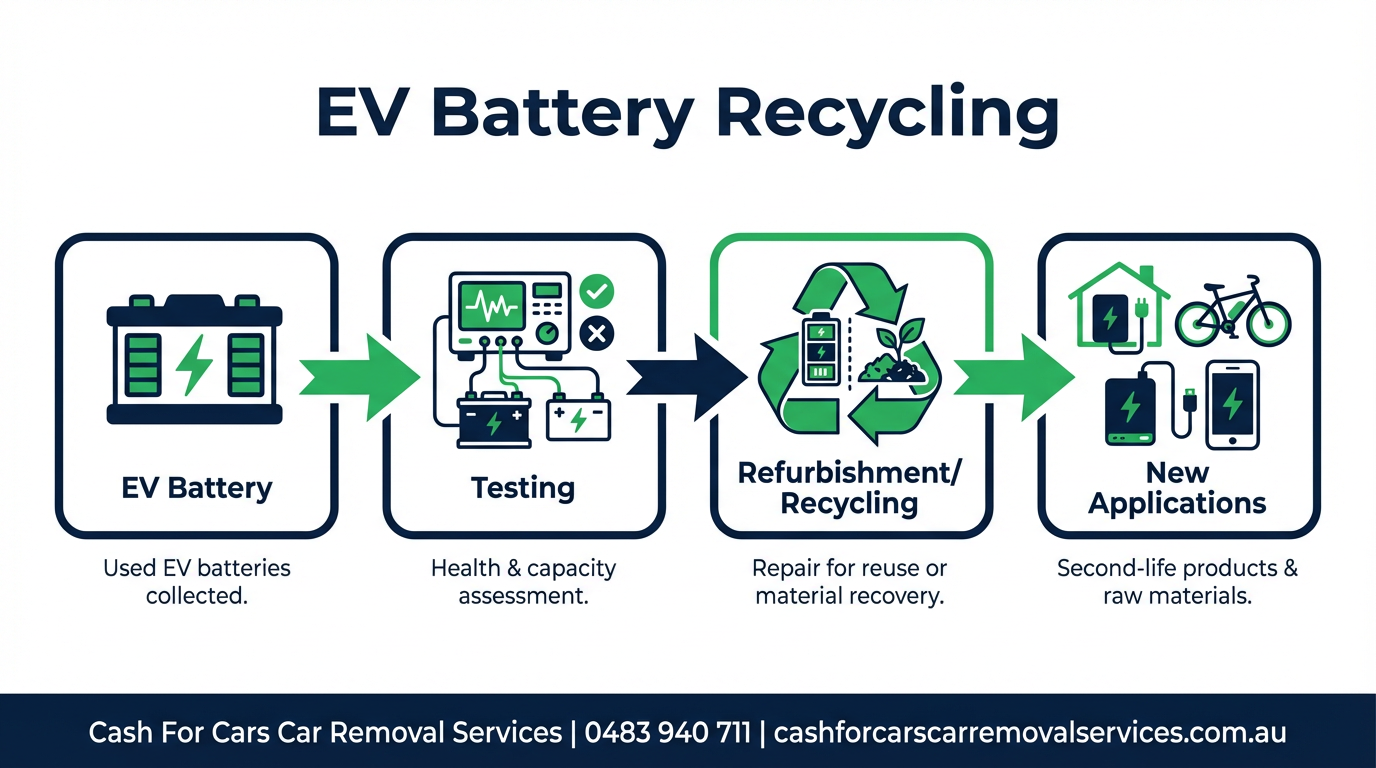
EV Battery Recycling
Battery Value
EV batteries are valuable even at end-of-life:
The Recycling Process
Step 1: Assessment
Batteries are tested for remaining capacity and condition.
Step 2: Discharge
Safe discharge to zero state for handling.
Step 3: Dismantling
Manual or mechanical separation of cells and components.
Step 4: Material Recovery
Chemical or physical processes to extract valuable materials.
Current Challenges
Australian EV Recycling Infrastructure
Current State
Australia is building EV recycling capability:
Future Developments
Selling Your Electric Vehicle
What We Offer
At Cash For Cars, we buy electric vehicles of all types:
Important Considerations
When selling an EV:
Environmental Benefits
Positive Impact
Proper EV recycling provides:
Our Commitment
We ensure all EVs are processed by facilities with:
Get an EV Quote Today
Have an electric vehicle to sell? We offer competitive prices for EVs in any condition. Call 0483 940 711 for an instant quote - we understand the unique value of electric vehicles.