
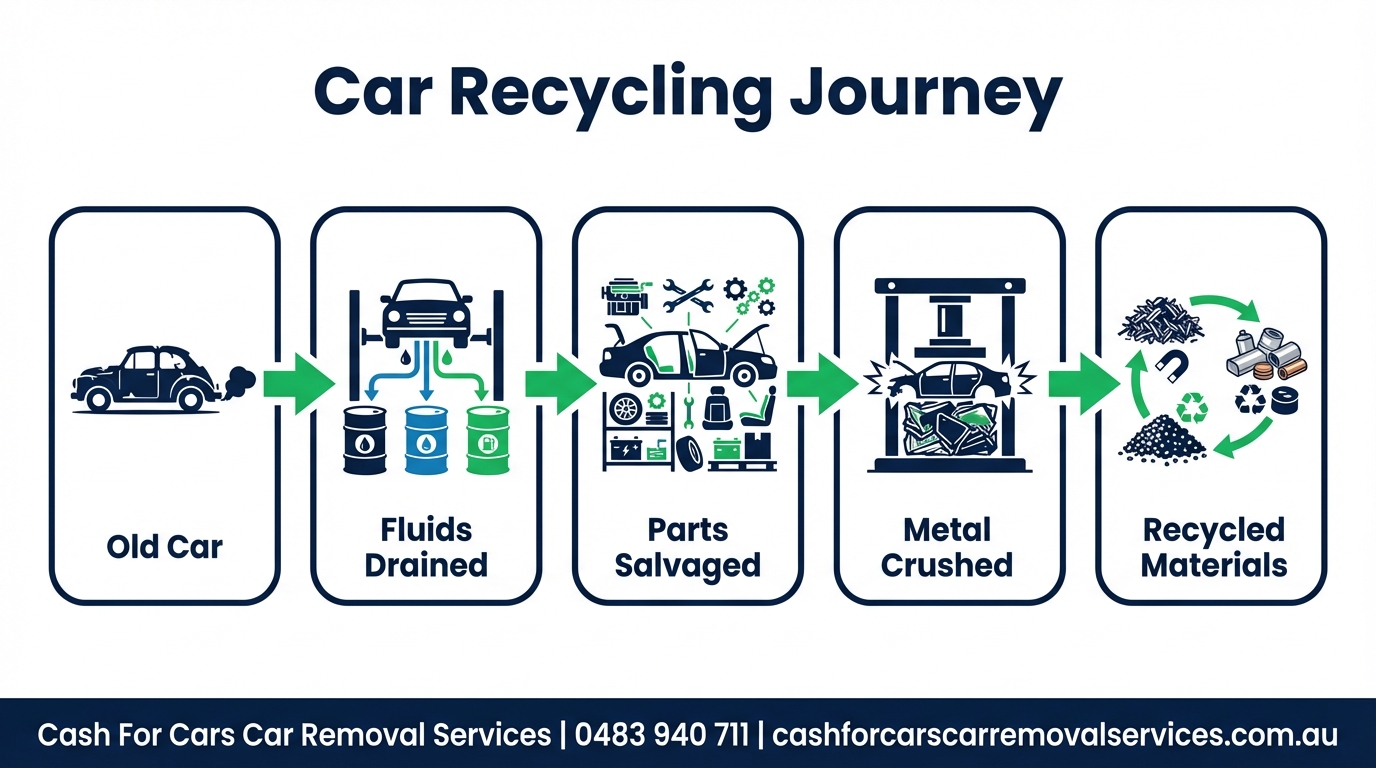
The Journey Begins
Ever wondered what happens after we collect your vehicle? The modern auto recycling industry is sophisticated, environmentally regulated, and surprisingly sustainable. Here's the complete journey.
Stage 1: Collection and Assessment
Initial Pickup
When we collect your vehicle, we note:
- Vehicle details (make, model, year, VIN)
- Overall condition assessment
- Any valuable or reusable components
- Hazardous materials present
- Digital records created
- Photos for documentation
- Preliminary assessment completed
- Routing determined (parts vs. recycling)
- Engine oil - Recycled into new oil or fuel
- Transmission fluid - Recycled or processed
- Brake fluid - Collected and processed
- Coolant - Recycled or safely disposed
- Power steering fluid - Recycled
- Fuel - Reused or processed
- Windscreen washer fluid - Collected
- Air conditioning refrigerant - Captured (ozone-depleting)
- Battery - Lead-acid batteries are highly recyclable (99%+)
- Mercury switches - Older vehicles may contain these
- Airbag inflators - Safely deployed or disposed
- Brake pads (older) - May contain asbestos
- Prevents groundwater contamination
- Recovers valuable resources
- Protects worker health
- Meets EPA requirements
- Engines and transmissions
- Body panels (doors, bonnets, guards)
- Lights (headlights, tail lights)
- Interior components
- Wheels and tyres
- Electronics
- Glass
- Visual inspection
- Functional testing where possible
- Condition grading
- Cataloguing in inventory systems
- Auto recyclers' retail operations
- Online marketplaces
- Mechanic and repairer networks
- Export markets
- Reduced manufacturing demand
- Lower energy consumption
- Less raw material extraction
- Extended vehicle component lifecycle
- Steel (body, chassis)
- Aluminium (engine blocks, wheels)
- Copper (wiring, motors)
- Zinc (coatings)
- Dashboard components
- Bumper materials
- Interior trim
- Various types identified and separated
- Windscreens
- Side windows
- Mirrors
- Tyres
- Seals and gaskets
- Hoses
- Foam
- Fabric
- Carpeting
- Electronics
- Pre-shredding - Larger pieces reduced
- Main shredder - Powerful machines (up to 10,000 horsepower!) shred vehicles in seconds
- Material separation - Magnets, air separation, and other technologies sort materials
- Steel - ~65-70% of vehicle weight
- Non-ferrous metals - ~5-10%
- Shredder residue - ~20-25%
- Mixed plastics
- Fibres and foam
- Dirt and debris
- Small metal pieces
- Energy recovery
- Plastic separation
- Material recovery technologies
- Sent to steel mills
- Melted and reformed
- Returns as new steel products
- Could become a new car!
- Highly valuable
- Melted at lower temperatures than virgin aluminium
- Energy savings of 95% vs new aluminium
- Used in new vehicle parts, cans, construction
- Extremely valuable
- Refined and reused
- Essential for electrical applications
- Strong recycling market
- Zinc, lead, brass recovered
- Specialized processing
- Returns to manufacturing
- 75-80% recycled as metals
- 5-10% reused as parts
- 10-15% other recovery (energy, materials)
- 5% landfill (continuously improving)
- ~2,500 kg iron ore
- ~1,400 kg coal
- ~120 kg limestone
- Significant water
- Significant energy
- NSW EPA
- EPA Victoria
- QLD Department of Environment
- WA DWER
- And others
- Proper facility design
- Stormwater management
- Hazardous waste handling
- Record keeping
- Regular inspections
- Australian Automotive Aftermarket Association guidelines
- ISO environmental standards
- Industry best practices
- Proper licensing
- Environmental certifications
- Professional facilities
- Transparent processes
- Good industry reputation
- Legal compliance
- Environmental protection
- Proper documentation
- Stolen vehicle checks
- Industry sustainability
- Proper depollution procedures
- Maximum material recovery
- Responsible disposal
- Full documentation trail
Transport to Facility
Vehicles are transported to licensed auto recycling facilities. These are strictly regulated under environmental protection laws in each state.
Initial Processing
Upon arrival:
Stage 2: Depollution
Before any dismantling begins, all hazardous and reusable fluids are removed:
Fluids Removed
Other Hazardous Materials
Why Depollution Matters
Environmental regulations require proper depollution:
Stage 3: Parts Recovery
Salvageable Parts Assessment
Quality parts are tested and catalogued:
Commonly Recovered Parts:
Quality Testing
Recovered parts undergo:
The Second-Hand Parts Market
These parts enter the market through:
Environmental Benefit
Reusing parts means:
Stage 4: Component Separation
Materials Segregated
Different materials are separated:
Metals:
Plastics:
Glass:
Rubber:
Other Materials:
Stage 5: Shredding
The Shredding Process
What remains after parts removal goes to shredding:
Typical Shredder Output
Shredder Residue
The remaining material (called "shredder fluff" or ASR) contains:
Modern facilities increasingly recover value from this:
Stage 6: Material Processing
Steel and Iron
Aluminium
Copper
Other Metals
The Numbers
Vehicle Recycling by Weight
Approximately:
Environmental Impact
Recycling one average car saves:
Australian Regulation
State Environmental Agencies
Each state regulates auto recyclers:
Requirements Include
Industry Standards
Professional recyclers also follow:
Choosing Responsible Recyclers
Look For
Why It Matters
Using licensed recyclers ensures:
Our Commitment
At Cash For Cars Car Removal Services, we partner exclusively with EPA-licensed recycling facilities that meet or exceed all regulatory requirements.
We ensure:
When you sell to us, you can be confident your vehicle is recycled responsibly and sustainably.
Have Questions?
Want to know more about what happens to your specific vehicle? Call 0483 940 711 - we're happy to explain our process and our recycling partners' operations.
Your old car can live on in recycled steel, recovered parts, and reclaimed materials - that's something to feel good about!